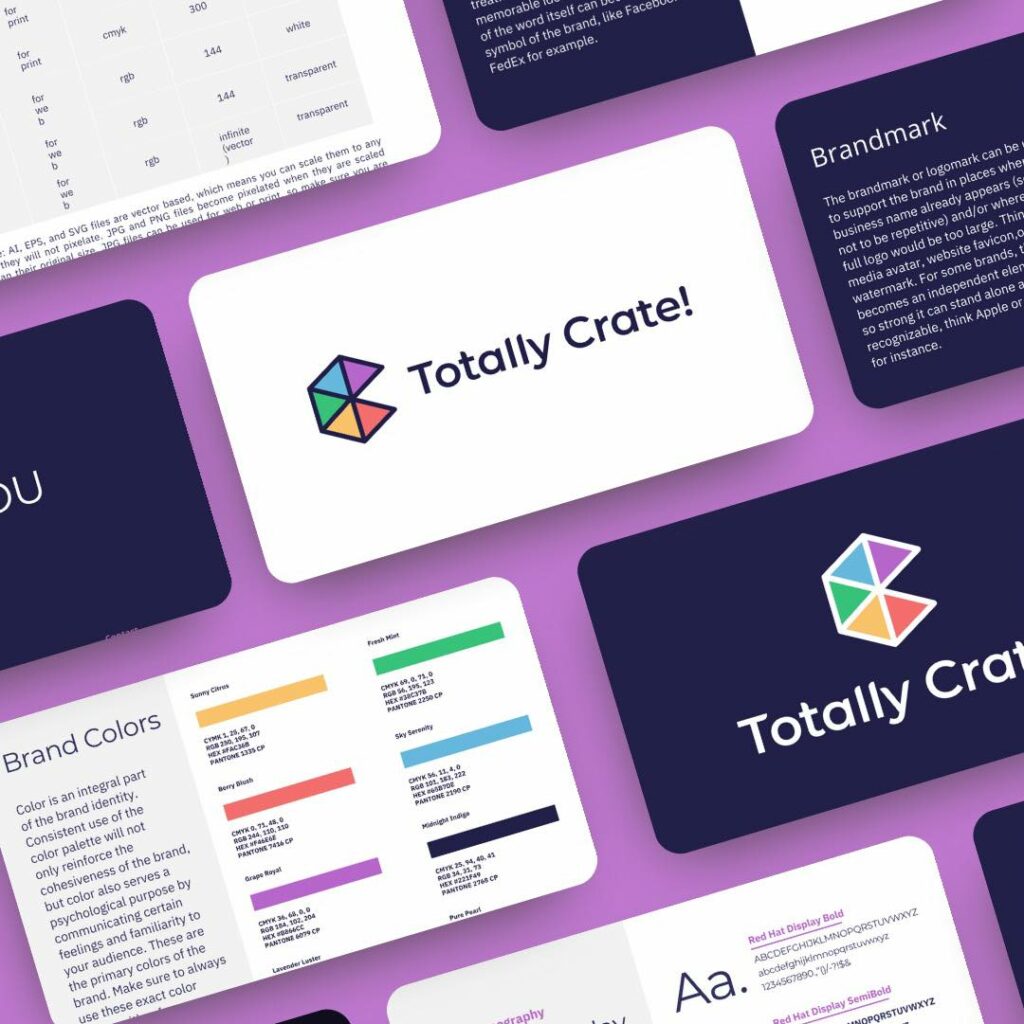

When I started working with more clients and handing off pieces of my own brand to other people, I realized something uncomfortable: everything I knew about my brand lived entirely in my head.
The colors, the fonts, the way things should feel. All of it. Just… in there.
That works fine when you’re doing everything yourself. But the moment someone else touches your brand, you’ll wish you had written it down.
If you’re growing your business and starting to bring people in, brand guidelines aren’t a nice-to-have. They’re the thing that keeps your brand recognizable while everything else is changing.
What Are Brand Guidelines, Exactly?
Think of a brand guide as a recipe book for your brand. It tells anyone working on your behalf exactly how your brand should look, feel, and communicate with your audience.
That means the practical stuff: your logo, your brand colors, your fonts, the type of imagery you use. But a thorough brand guide goes further than visuals. It captures your voice, your tone, and the personality behind everything you put out into the world.
The goal is simple: anyone who opens that document should be able to represent your brand consistently, whether that’s a new designer, a social media manager, or a contractor you hired last Tuesday.
Why a Brand Guide Matters More as You Grow
Here’s where it gets real. When you’re the only one touching your brand, inconsistency isn’t really a problem. You are the brand.
But growth changes that. You start delegating. Someone else is posting to your social media. A designer is refreshing your website. A new team member is writing emails on your behalf.
Without a brand guide, you’re crossing your fingers and hoping everyone just figures it out. Spoiler: they don’t always.
The risk isn’t just that something looks a little off. The bigger risk is that your customers start to feel a disconnect. They came to you because something about your brand clicked with them. When that starts to feel inconsistent, it chips away at the trust you’ve spent years building.
A brand guide keeps that from happening. Here’s how it helps:
- It saves you time.
When a designer asks what colors to use or what font to pair with your logo, you don’t have to stop what you’re doing to answer. You send them the brand guide. That’s it. What could’ve been a 45-minute back-and-forth becomes a five-minute hand-off. That kind of efficiency adds up fast. - It builds trust with your audience.
Consistency is what makes a brand feel familiar. And familiar feels trustworthy. When your website, your social posts, and your marketing materials all feel like they came from the same place, your audience starts to recognize you before they even read a word. That recognition is worth a lot. - It keeps you connected to your own identity.
This one surprises people. Brand guidelines aren’t just for your team. They’re for you, too.
I’ve seen it happen: a business owner gets deep in the weeds of growing, and somewhere along the way they lose the thread of what made their brand theirs in the first place. It’s easy to do. When you’re spinning plates, you don’t always have time to ask “does this feel right?”
A brand guide gives you a quick reference point. It’s a place to come back to when something feels off and you can’t quite put your finger on why.
What Your Brand Guide Should Include
There’s no single right format, but a solid brand guide covers at least these core elements:
- Logo: How it should be used, how it shouldn’t, and what variations are approved
- Colors: Your primary palette and any secondary colors, with exact codes (hex, RGB, CMYK)
- Typography: Which fonts are yours, how they’re paired, and where each one is used
- Imagery: The style of photos or graphics that fit your brand, and what doesn’t
- Voice and tone: How your brand communicates, what words you use, and how you want people to feel when they read your content
If your brand has been around for a while and you’re planning a refresh, this is also a great time to revisit those elements and make sure they still reflect where your business is headed.
You Don’t Have to Figure This Out Alone
If the idea of putting all of this together feels overwhelming, you’re not alone. A lot of established businesses have been operating on instinct for years, and formalizing it feels like a big lift.
It doesn’t have to be. The right branding partner can help you pull out what’s already there and get it into a format your whole team can actually use.
The bottom line is this: your brand is one of your most valuable business assets. As you grow, protecting it means giving the people around you the tools to represent it well.
If you’re not sure where to start, we’d love to help. Reach out and let’s talk about your brand.